India's fabric hygiene knowledge base · WHO · BIS · CPCB sourced · Independent editorial · No brand sponsorship · No product comparisons · 16 Indian cities covered · 22+ fabric types ·

Local fabric care guide

Fabric Care in Mumbai — Coastal Humidity, Salt Air and Small Homes

Mumbai's coastal air, long monsoon and limited drying space create a distinct set of fabric problems. How to wash, dry and store clothes in a humid coastal city.

TDS 150–300 ppm

Moderately soft water — good detergent performance

80–90% humidity

Coastal monsoon — highest mildew risk of the metros

Salt-laden coastal air

Accelerates fibre and fastener corrosion

Mumbai's water is comparatively soft, which removes the hard-water problem that dominates most Indian cities. What replaces it is harder to solve: salt-laden air, the longest and wettest monsoon of the metros, and homes where clothes frequently have to dry indoors.

See Mumbai's water hardness data →

Incomplete drying, not washing, causes most damage

Mildew odour is a biological signal, not a cleanliness failure. When a cotton garment stays damp for longer than roughly a day, bacteria and mould metabolise residual soil and sebum, and the volatile compounds they release are what produce the persistent musty smell. Re-washing without fully drying simply restarts the cycle.

Where outdoor drying is not possible, the priority is airflow rather than heat. Space garments so air moves between them, keep a fan running rather than sealing the room, and finish thick items — denim, towels, curtains — with machine drying or ironing rather than leaving them at the last stage of dampness.

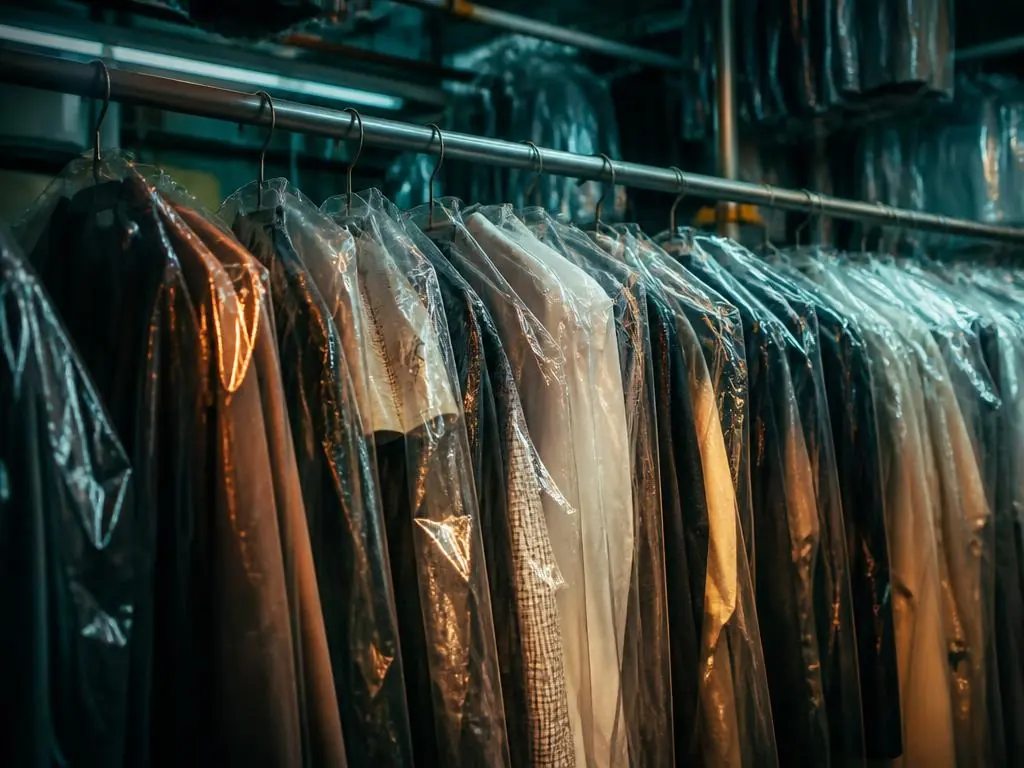
Salt air works on fasteners before it works on fibre

Airborne chloride accelerates corrosion of metal components long before it affects the textile itself. Zips, hooks, saree pins, and decorative metal on occasion wear are the first things to fail in seafront homes, and a corroding fastener can stain surrounding fabric permanently.

For garments worn near the sea, rinse thoroughly rather than spot-cleaning, dry metal components fully before storage, and avoid storing embellished wear in unventilated plastic where trapped humidity and salt concentrate against metal.

Occasion wear and the dry cleaning question

Mumbai households tend to hold a larger proportion of structured and embellished occasion wear than the national average, and these are precisely the garments that water washing damages — through fibre relaxation, dye migration, and loss of interfacing shape.

The useful discipline is deciding by construction rather than by fabric name: anything with interlining, hand embroidery, applied stone or sequin work, or a lining that shrinks at a different rate to the shell should go to solvent cleaning, whatever the outer fibre happens to be.

Common questions — Mumbai

How do I stop clothes smelling musty during the Mumbai monsoon?

Reduce the time fabric stays damp. Wash smaller loads, use a full spin cycle, dry with air movement rather than in a closed room, and never fold or stack anything that is still cool to the touch.

Does sea air really affect clothing?

It mainly affects metal fittings. Chloride in coastal air corrodes zips, hooks and decorative metalwork, and corrosion products can stain the fabric around them.

Guides relevant to Mumbai

Sunlight falling through household curtains
01Home Textiles & Hygiene7 min read

How Often Should You Wash Your Curtains — A City-by-City Guide for Indian Homes

Curtain cleaning frequency depends on your city's humidity, air quality, and cooking habits. A practical city-by-city guide for Indian homes.

Read guide →
Garments in protective covers on a dry cleaning rail
02Care Methods7 min read

Which Fabrics Actually Need Dry Cleaning — And Which Do Not

"Dry clean only" is often manufacturer caution, not a physical necessity. Here's which Indian fabrics genuinely need dry cleaning and which can be safely hand washed.

Read guide →
Macro view of synthetic fabric fibres
03Sustainability7 min read

Microplastic Shedding from Synthetic Fabrics: What the Research Shows and What Reduces It

A decade of peer-reviewed research confirms every wash of polyester, nylon or acrylic releases plastic microfibres. What the studies measure, where the fibres go in India, and what actually reduces shedding.

Read guide →

Service guidance

Choosing a Professional Fabric Care Service in Mumbai

Professional fabric care varies significantly in quality across Mumbai. Before entrusting delicate or valuable garments to any service, these are the questions worth asking and the standards worth knowing.

Questions to ask before handing over garments

  • ·What solvents or chemicals do you use for dry cleaning?
  • ·Do you treat each fabric type differently, or use a standard process?
  • ·How do you handle stain pre-treatment?
  • ·What is your policy if a garment is damaged during cleaning?
  • ·Can you show me where my garments will be cleaned?

What separates a professional service from a basic one

  • ·Fabric identification before treatment — not all fabrics respond to the same process
  • ·Separate handling for delicate items: silk, wool, embroidered, and embellished garments
  • ·Solvent quality disclosure — professional services should be transparent about what they use
  • ·Garment inspection on return — check for shrinkage, colour change, and residue

Red flags when evaluating a laundry or dry cleaning service

  • ·No clear information on what cleaning process is used
  • ·Same process claimed for all fabric types regardless of care label
  • ·No intake inspection — garments accepted without noting pre-existing damage
  • ·No clear pricing before service, only after

How to compare services in Mumbai

A dependable service inspects each garment on intake, records its fabric composition and care label, and chooses a cleaning method accordingly — rather than running everything through one default process. Ask how delicate, embroidered, and occasion wear are handled differently from daily cottons.

Read our full service evaluation guide →